

A face isn't a content business. I can make a good-looking character and still have no useful reason for anyone to follow it.
So I'd start the other way round. Who is the account for, what will it help them do and why should they come back next week?
The title describes the launch process I'm walking through, not a claim about a real account's results. This is an illustrative 2027 launch, written ahead of the year. The character, content plan and commercial examples below are made up. I'm not presenting follower counts, sponsorships or sales as things I've achieved.
If you're working out how to create an AI virtual influencer, this is the practical sequence I'd use. Pick one audience, define a character, create a small batch in Imimic, review it carefully and connect the useful posts to one honest offer.
My team at Teknikforce makes Imimic. It's my first choice here because its site describes character identity, images, video and persona-based posts in the same product. That doesn't remove the need for editing, permissions or a human running the account.
Give the account one useful job
For this walkthrough, I'd create Mira, a fictional virtual presenter for people furnishing a small rented flat. The account's job is to explain storage and layout ideas that don't depend on knocking down walls.
That's narrower than "home inspiration" and much easier to turn into useful content. A first post could explain why a shallow shoe rack helps in a narrow entrance. Another could compare closed storage with open shelving in a small room.
I'd avoid inventing a professional qualification for Mira. She's a virtual presenter sharing researched ideas, not an architect, a customer or a person with a rented flat of her own.
Before choosing the niche, I'd write down a dozen real questions the audience asks and identify an offer that could genuinely help. If every idea is just another attractive room image, I'd tighten the subject before producing anything.
Make a character brief before making a feed
I'd give Mira a simple identity document. It would include her name, fictional status, visual details, interests, tone and the topics she won't cover.
For example, she might use plain language, prefer affordable fixes and admit when an idea won't suit every room. Her clothes could stay within a small color palette. Her content wouldn't imply that she owns the products or personally lives in the generated spaces.
I would also write a short list of things she never says. No "I used this for six months". No invented customer story. No claim that a storage product is safe to climb on because an image happens to show it that way.
The brief is useful even when the software maintains character identity. It gives me something concrete to compare outputs against. Consistency isn't only the face. It's also the opinions, vocabulary and boundaries.

Choose a small tool stack
I'd keep the stack short while learning the workflow. Adding more subscriptions before the account has a clear purpose won't solve the editorial problem.
| Tool | Job in this example | Price reference | Limitation I'd keep in mind |
|---|---|---|---|
| Imimic | Character identity, images, video and persona-based posts | $6.99 a month or $67 a year | Check credits, AI options and the licence for client work |
| HeyGen | Alternative for a more presenter-led video workflow | Free tier, Creator $29 a month | Video credits and feature limits apply |
| Native social publishing tools | Publish approved content and review account analytics | No separate software subscription for ordinary account tools | Features and eligibility differ by platform |
| A local planning document | Keep the brief, scripts and approval notes together | No extra subscription if using existing software | Doesn't generate content or manage the account |
I checked the vendor pages in November 2026. Imimic costs $6.99 a month or $67 a year. I'd check the selected plan and its allowances at checkout.
The site lists an Elite self-business licence and says client services need Pro or All-Inclusive. I'd settle the licence question before offering an agency package. A tool's ability to create an asset doesn't automatically give me every commercial permission I might need.
This isn't another tool roundup. If you want that broader comparison, read our AI influencer generator tools guide. Here I'm keeping the attention on one fictional account's first publishable batch.
Build the character in Imimic
I'd translate the brief into Imimic's character setup using its supported identity and personality controls. The sales page describes defining personality, interests and identity across content. I'd keep the first setup simple enough to judge consistently.
Then I'd create a few reference outputs before making a full content batch. A neutral portrait, a wider scene and a different angle would help reveal whether the character still looks recognizable.
I'd compare face shape, hair, apparent age, clothing details and overall style. If those vary too much, I'd adjust the character direction and regenerate before committing to a month of posts.
These are editorial steps, not a claim about exact button labels in a private dashboard. I'd use the controls available in the chosen plan and avoid assuming every advertised model or output type is included.
A fictional influencer is different from a replica of a real person. If your goal is to represent yourself, our digital twin walkthrough covers that path. Mira doesn't need somebody else's likeness to have a coherent identity.
Produce three pieces before promising daily posts
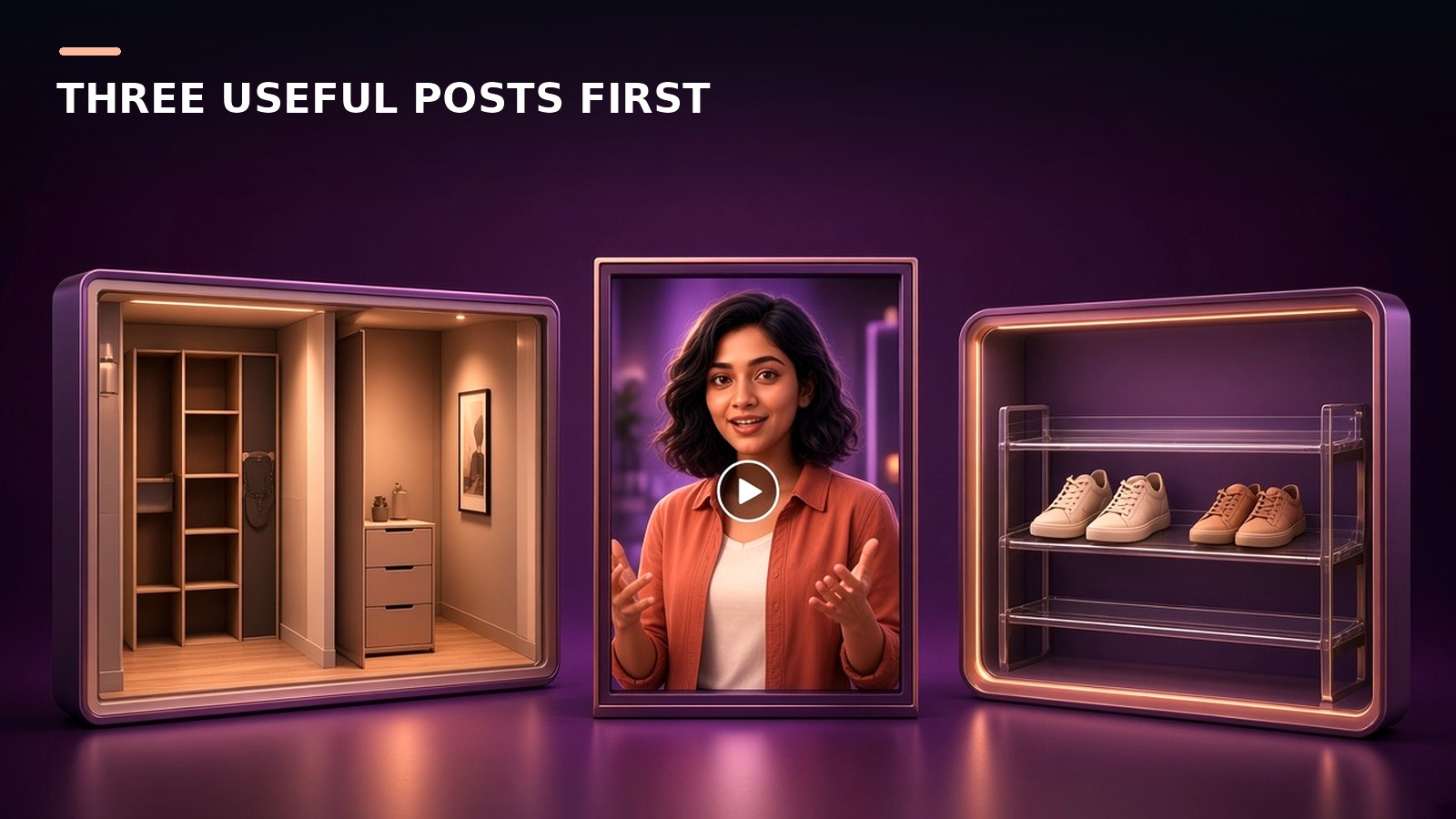
My first batch would contain one useful image post, one short explainer and one product-related post. That gives me enough variety to spot workflow problems without making a huge backlog.
For the image, I'd show two possible entrance layouts and explain the trade-off. I wouldn't claim the generated room is a measured plan. If dimensions matter, I'd verify them separately and put the practical guidance in the text.
For the explainer, I'd write a short script about checking door clearance before buying storage. Imimic's site describes turning images into video, making talking avatar videos and creating performances from uploaded audio. I'd choose the simplest supported format for the message.
For the product-related post, I'd illustrate a storage option with a clear disclosure and a link to genuine specifications. Imimic describes product placement in images and videos, but I'd inspect whether the actual item remains accurate before approving the output.
One good batch tells me more than thirty unreviewed variations. If the first three pieces need extensive repair, I would fix the process rather than increase the quantity.
Inspect the content like a buyer would
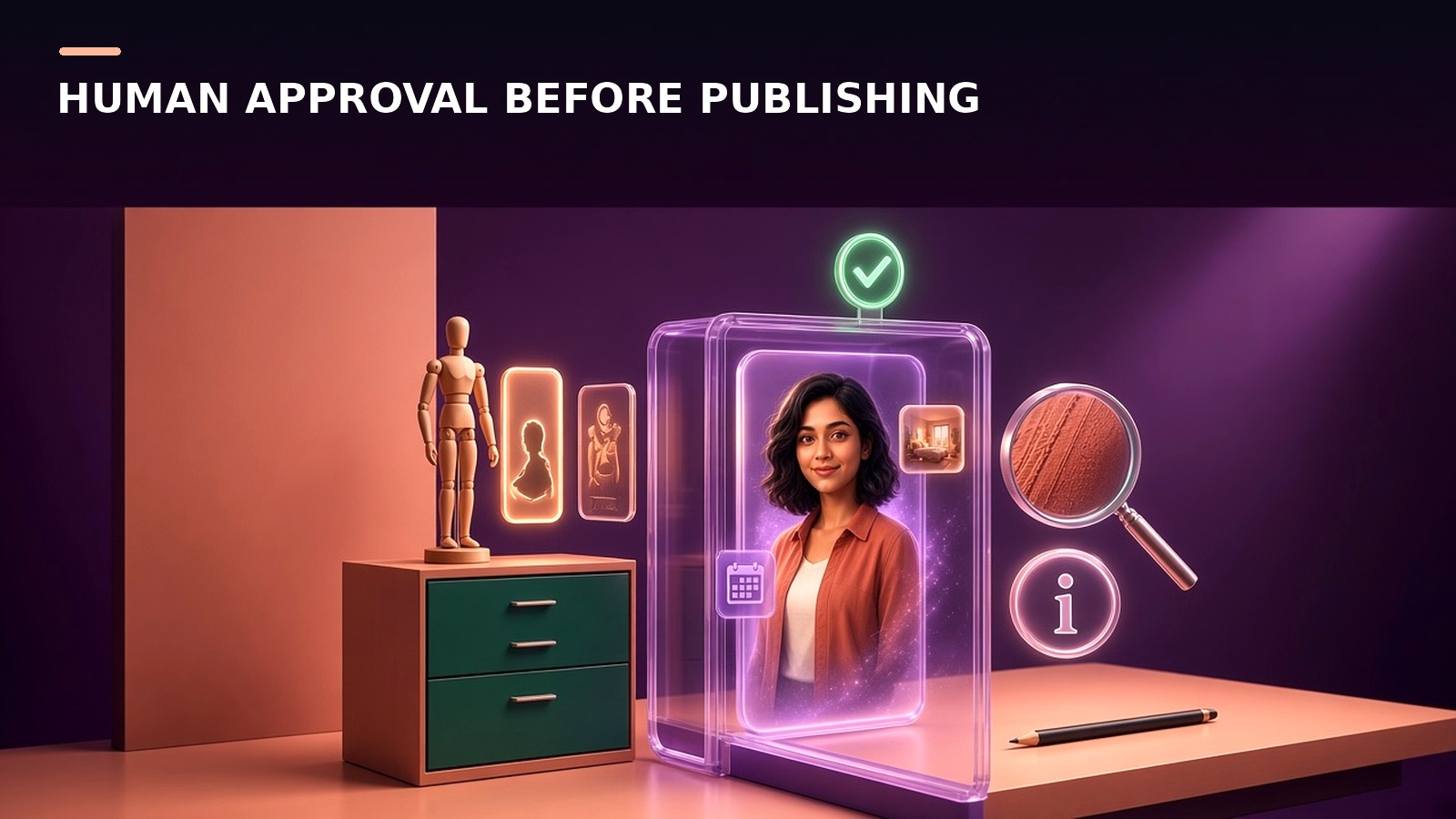
I'd review every output at full size. Hands, eyes, teeth, product edges and furniture geometry deserve a close look. A shelf that doesn't connect to its supports isn't a small styling choice.
Product details matter even more. The generated object mustn't gain an extra drawer, lose a safety label or change the advertised size. If I can't represent the item accurately, I'd use a genuine product image with permission instead.
Then I'd listen to the video without looking at it. Is the advice clear? Does the voice pronounce the product name properly? Does the script make a claim I can't support?
Finally I'd watch on a phone and check text size, framing and timing. I'd add readable designed text separately when necessary rather than trust generated lettering. The purpose is to communicate an idea, not prove that one generation can do everything.
Set a pace that leaves time for replies
I'd begin with three useful posts a week and keep a small buffer of approved material. That's a workload choice for this example, not a universal rule about what an algorithm rewards.
The content plan would rotate between a common problem, a comparison and an answer to a question. For Mira, that might mean a narrow hallway tip, a storage trade-off and a reply about rental-friendly wall hooks.
Imimic describes persona-based post creation and relevant news inputs. I'd treat those as idea and draft assistance. A news suggestion still needs checking, and a clever draft still needs to fit the account's purpose.
I wouldn't assume that content generation means every network is automatically scheduled or every comment is handled correctly. I'd publish through supported tools and keep a person responsible for the final approval and replies.
If a viewer asks whether a shelf fits their wall or can hold a certain weight, I'd refer them to real specifications. A fictional character shouldn't improvise product advice that could cause damage.
Make the account's fictional nature obvious
I'd put a clear description in the bio, such as "Mira is a fictional AI-created presenter sharing small-space ideas, edited by a human team". I would also use the platform's appropriate disclosure settings on individual posts.
For YouTube, the GenAI disclosure guidance requires disclosure for realistic generated or meaningfully altered content. I'd check the current upload controls and the equivalent rules wherever else I publish.
An AI label and an advertising disclosure answer different questions. One tells viewers how the content was made. The other explains a commercial relationship. If a post includes an affiliate link or paid promotion, I'd make that relationship clear too.
I wouldn't imitate a real person's face or voice without permission, invent attendance at an event or give the character fake lived experience. Being fictional gives me creative room. It doesn't justify misleading the audience.
Connect one useful offer to the account
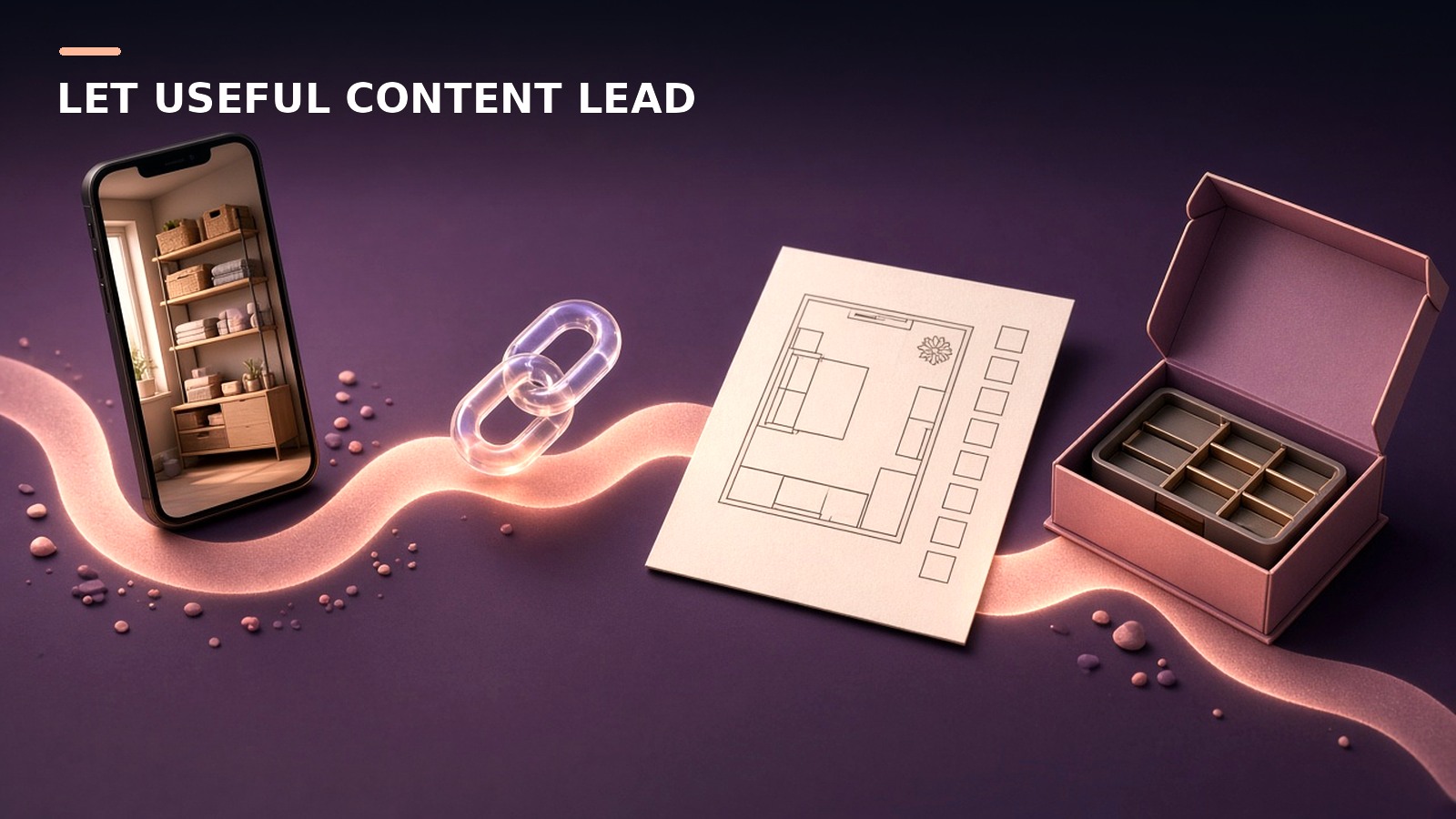
For the example launch, I'd choose a simple room-planning checklist as the first offer. The post gives a useful idea, the profile points to the checklist and the checklist can introduce a relevant paid product later.
Alternatively, a product comparison could link to an affiliate offer with disclosure. I'd explain who the product suits and who should skip it. I wouldn't write a first-person testimonial from Mira as if she had bought and used it.
I'd keep the path short. A viewer shouldn't have to guess whether a link opens a checklist, a shop or a consultation request. The destination should match the promise in the post.
These are possible commercial routes, not revenue forecasts. A virtual influencer account still needs distribution, useful content and a worthwhile offer. Sponsorships won't materialize just because the character looks convincing.
We've covered broader campaign and monetization choices in our virtual influencer marketing guide. My launch goal here is smaller. Make the account coherent, publish honestly and see whether the intended audience finds the content useful.
Keep a simple learning log
I'd record what each post tried to do. Was it meant to earn saves, answer a recurring question or send interested viewers to a relevant page?
Then I'd review the evidence available in the platform and destination analytics. A high view count with no useful response might mean the visual attracted the wrong people. A quieter post with specific questions might suggest a better subject for the next batch.
I'd also track production effort. If a short video requires repeated repairs while an image explains the same idea clearly, I wouldn't insist on video for its own sake.
The first month is a learning period, not a deadline for making an income claim. I would keep what helps the audience, remove what confuses them and revise the brief when the account's purpose becomes clearer.
A few common questions
Do I need to use my own face
No. A fictional virtual influencer can have an original identity. A digital twin represents a real person and brings different consent and accuracy considerations. Don't copy a recognizable person's likeness without permission.
Will Imimic keep the character identical every time
The product describes persistent character identity and personality. I'd still inspect each output for drift, anatomy and product accuracy. A consistency feature is a reason to consider the tool, not a substitute for approval.
Can I start with images instead of videos
Yes. I'd choose the format that communicates the idea clearly. An image and a useful explanation can be a more sensible starting point than a complicated video that takes hours to repair.
Can the influencer claim to have used a product
Not if that experience is invented. I'd describe verified features, demonstrate an idea accurately and disclose commercial links. A fictional presenter shouldn't deliver a fabricated customer testimonial.
Does buying Imimic guarantee sales
No. It helps create content. Audience fit, distribution, trust and the offer still decide whether the account becomes commercially useful. The example here includes no claimed sales results.
What should I check before creating accounts for clients
Confirm the Imimic licence, permissions for faces and voices, product rights, disclosure requirements and the client's approval process. The Elite licence is described as self-business use, so don't assume it covers agency services.
Start with one character and three useful posts
I'd use Imimic to build the first small batch, not a fictional success story. It costs $6.99 a month or $67 a year. Confirm billing, credits and permissions, then create one character, review three pieces and give the account one clear reason to exist.